 Retyped by Suzanne Stroh
Writers! When you read 1,200 perfect words, retype them.
That’s what I wanted to do as soon as I finished “The Movie of Your Life” by B. Brandon Barker.
Is Barker in the same league as Steve Martin, or what? Clever, funny writing.
If you don’t retype, you should. I write screenplays according to the Ackerman method (Write Screenplays That Sell). The first thing I do when beginning a new project is retype the screenplay that I’m measuring myself against.
If only George Clooney had done that before writing THE MONUMENTS MEN.
Retyping should go up there with 10,000 hours, the Scenogram and Hal Ackerman in that documentary that really needs to be made, HAIL MAGNIFICENT SCREENWRITERS. Retyping scripts and stories is how you pay homage to your worthy competitors. How you study your highest competition. How you regraft it so that you live and breathe your genre.
And now ladies and gentlemen, without further ado, I give you Brandon Barker.
The Movie of Your Life
by B. Brandon Barker
Beginnings and Endings: The Movie of Your Life will be based on your life story, focusing on your life’s major conflict, supported by any minor conflicts. The Movie of your Life will end after the resolve of your final conflict.
Protagonists and Antagonists: Unless otherwise determined, you will be the hero of the Movie of Your Life. This is assuming that you are a sympathetic person. In the event that you are not, adjustments will be made to craft a more likeable character out of you.
Talent: Actors are selected for The Movie of Your Life based on their likeness to you and, in some cases, their need for work. You will have no input in deciding who plays you or any other character in The Movie of Your Life. In addition, you may not portray yourself or any other character.
Plot Spoilers and Embellishments: By the time The Movie of Your Life is released, your story may already be known; for example, you may be a celebrity, a politician, an athlete, an artist or a very, very foolish person with a video camera. If you fall into one of these categories, certain well-known moments from your life may be passed over in favor of those that are not so well known. On the other hand, you may have led a life lacking both curiosity and distinction, not to mention abundant wealth, in which case efforts will be made to embellish your experiences by utilizing effects such as montages, fictional characters, gospel choirs and dream sequences.
Dream Sequences: Dreams by their very nature are difficult to convey. For this reason, dream sequences tend to interrupt the narrative flow with elf-indulgent and unnecessary weirdness: menacing clowns, talking plants and rooms full of disco balls come to mind. However, some dreams are major, life-changing events, making lasting impacts on the dreamers and in come cases drastically altering lives. Nevertheless these epic dreams, when illustrated on film, can seem boring, sappy and comical. Therefore an extraordinary dream may be featured in The Movie of Your Life, a nonsensical one may not.
Moral Sense: Everyone’s life has certain unsavory details. Some people’s passions or personal habits may be considered by a general audience to be immoral, pitiful or obnoxious. It’s understandable, then, that you’ll want one or two details stricken from The Movie of Your Life. Over time, your opinion will fluctuate over which of these details are truly unsavory and which are simply embarrassing, making this an exhausting part of the pre-production stage. It’s also an ideal moment to let go. When your life is depicted on film it leaves the confines of personal experience and enters what you might call a blameless realm. This is not to say that The Movie of Your Life will consist of one, long unsavory detail, of course. Rest assured that these scenes, if used, will appear in a tasteful and contextual manner that allows viewers to better understand, and possibly accept, their own unsavory lives.
Montages: If The Movie of Your Life is excessively talky, highly involved or features a high-stakes car chase, a montage—i.e. a series of brief, related scenes joined together by a familiar song—may be employed to allow the audience to take a mental break or maybe get some fresh air. Due to copyright issues, however, only three montage songs will be available: Van Morrison’s “Brown-Eyed Girl,” Judy Collins’ “Both Sides Now.” And Bell Biv De-Voe’s “Poison.” Please take great care in choosing a song that captures the spirit, style and intensity level of the scenes depicted in the montage portion of The Movie of Your Life.
The Enjoyment of Others: You may find it difficult to watch The Movie of Your Life. The very thought of reliving certain uncomfortable moments or hearing yourself repeat certain phrases could be unbearable. But The Movie of Your Life is not intended for your enjoyment. Rather its purpose is to entertain, teach, inspire and sometimes warn others. Just remember that no matter how tragic, no matter how vapid or repugnant your story, someone somewhere will see The Movie of Your Life and find it enjoyable.
Unintended Laughter: People may laugh during The Movie of Your Life. They may chortle, snicker and guffaw during poignant scenes. Rather than empathize with your struggles, members of the audience may belittle you—some out of poor manners, others because they are insane. Keep in mind that you have no control over how people react to The Movie of Your Life. As you watch the film in a public theater surrounded by strangers, it’s important to remain focused on the shape, tone and wonderment of your own story line.
Personal Evaluations: You may consider your life a failure. The Movie of Your Life may agree, highlighting moments where you neglected loved ones, broke promises, abandoned your dreams or let important moments slip away. The Movie of Your Life will depict these moments constructively, using your story to revive the spirits of those with low confidence, paralyzing regrets and bad attitudes. If your life is indeed a certified failure, The Movie of Your Life may even attempt to redefine the meaning of failure itself.
Peer Appreciation: People may not “understand” The Movie of Your Life. But, can they say why? In order for The Movie of Your Life to be understood, in order for people to even bother examining its obscurities and impulses, it is crucial for you to develop an appreciation for the movies of other people’s lives.
The Movies of Other People’s Lives: Unless you have lived a solitary existence, you—or rather your character—will most likely appear in the movie of someone else’s life. Unless deliberately removed, you will probably play a major role in the life stories of your parents, spouse(s) and children, not to mention your friends and coworkers or even strangers whose lives you inadvertently affected, in which case there is a good chance that the facts of your stories will conflict. We are sorry but there is little that can be done to avoid this.
Life After The Movie of Your Life: If you live long enough to see the results of the hard work and inspiration that go into making The Movie of Your Life you will, of course, not witness your definitive ending. After viewing the film you may realize that you possess the extraordinary ability to undermine your own story line. In other words, seeing the narrative of your own fate could influence you to abruptly change course, whether by forgiving wrongs, changing opinions or doing really idiotic things. But, still: Whether you are alive or dead upon the release of The Movie of Your life, the true ending of your life story, and therefore the ultimate mystery of your existence, will be determined beyond the forces of The Movie of Your Life’s control.
Specs: The Movie of Your Life must be less than three hours long and shot at least ninety percent in color—Dream Sequences included. It must adhere to budget restrictions and take no longer than six weeks to produce. There will be no exceptions.
1,200 words
###
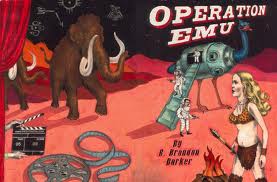
B. Brandon Barker’s monogram, like mine, observes French propriety, following the rule of jamais deux sans trois. We both live in the northern Virginia countryside, write screenplays, love day jobs, carry frayed Patagonia courier bags, eschew late model luxury cars and wear our hair in a pony tail from time to time. Sometimes we shake out our hair in public to attract attention like Yanni. In order that we not be mistaken for one another, Barker has mercifully written a comic novel, OPERATION EMU, that was the focus of a story in The Baltimore Sun. This story first appeared in Global City Review No. 21, Nothing is Simple, Spring/Summer 2009. Retyped flagrantly without permission; reprinted by permission of the author.


 Cape Cod’s oldest film festival turns 23 this week. I’m honored to be taking part.